
Serie A can feel like a members' club. The football is stylish, the storylines are operatic, and the English-language coverage is often one step behind the goals. The reassuring part is that the league is easy to follow once you know four things: how the season is built, which fixtures carry real weight, what a Sunday night in Bergamo or Bologna actually feels like, and where to find coverage that treats you like an adult. Here is the short version, written for someone starting from zero.
How the Italian season is built
Twenty clubs, each playing the other nineteen twice — home and away — for 38 matches running from late August to May. Three points for a win, one for a draw. Nothing exotic so far.
The differences show up at the edges. The bottom three drop to Serie B. The top four normally go into the Champions League, though Italy has occasionally claimed a fifth place through UEFA coefficient performance. Fifth usually means the Europa League, and the Coppa Italia winner picks up a European spot too, which is why a mid-table club's cup run can quietly rewrite the meaning of eighth place.
One rule to absorb early: when two clubs finish level on points, Serie A looks at their head-to-head results before goal difference. A scruffy 1-0 in October can outweigh a 4-0 rout in April. It shapes how teams approach the return fixture, and it is why Italian supporters keep mental ledgers of scorelines the way English fans track goal difference.
The Coppa Italia runs alongside the league as a knockout competition, mostly single-legged, with extra time and penalties when needed. The Supercoppa Italiana, the traditional curtain-raiser between league and cup winners, has been expanded in recent years into a four-team event and is often staged abroad. Seeing it played in January in Riyadh is normal now, not a glitch.
The rivalries that set the mood of a season
Italian football does not ration its grudges. A few fixtures carry enough weight that the entire week around them feels different, and the atmosphere inside the ground is nothing like a routine league match.
- Derby della Madonnina (Inter vs Milan). Both clubs share San Siro, so the "home" team is decided by which curva is filled. Loud, glamorous, and usually tight.
- Derby della Capitale (Roma vs Lazio). The fiercest of the lot. The Stadio Olimpico splits into two curvas, and the build-up consumes the city for days.
- Derby d'Italia (Inter vs Juventus). The fixture traditionally framed as the league's establishment against its most stubborn challenger. Expect a slow, tense, tactically obsessed game.
- Derby della Mole (Juventus vs Torino). A proper city derby, with Torino carrying the older, more local identity.
- Others worth knowing. Genoa vs Sampdoria (Derby della Lanterna), Napoli vs Roma (Derby del Sole), Fiorentina vs Juventus, and Milan vs Juventus, which is less a derby than a feud between two of the country's biggest institutions.
Remember that a rivalry only breathes when both clubs are in the division. Italian football's lower leagues are full of famous names, and a promoted side can revive a grudge that has been dormant for years.
What a matchday actually feels like
Kickoff times are spread across the weekend: Saturday afternoon and evening, Sunday lunchtime, Sunday afternoon, Sunday night, and a Monday fixture. The Sunday 20:45 slot is the marquee one, and it is the rhythm most Italian fans organise their weekend around.
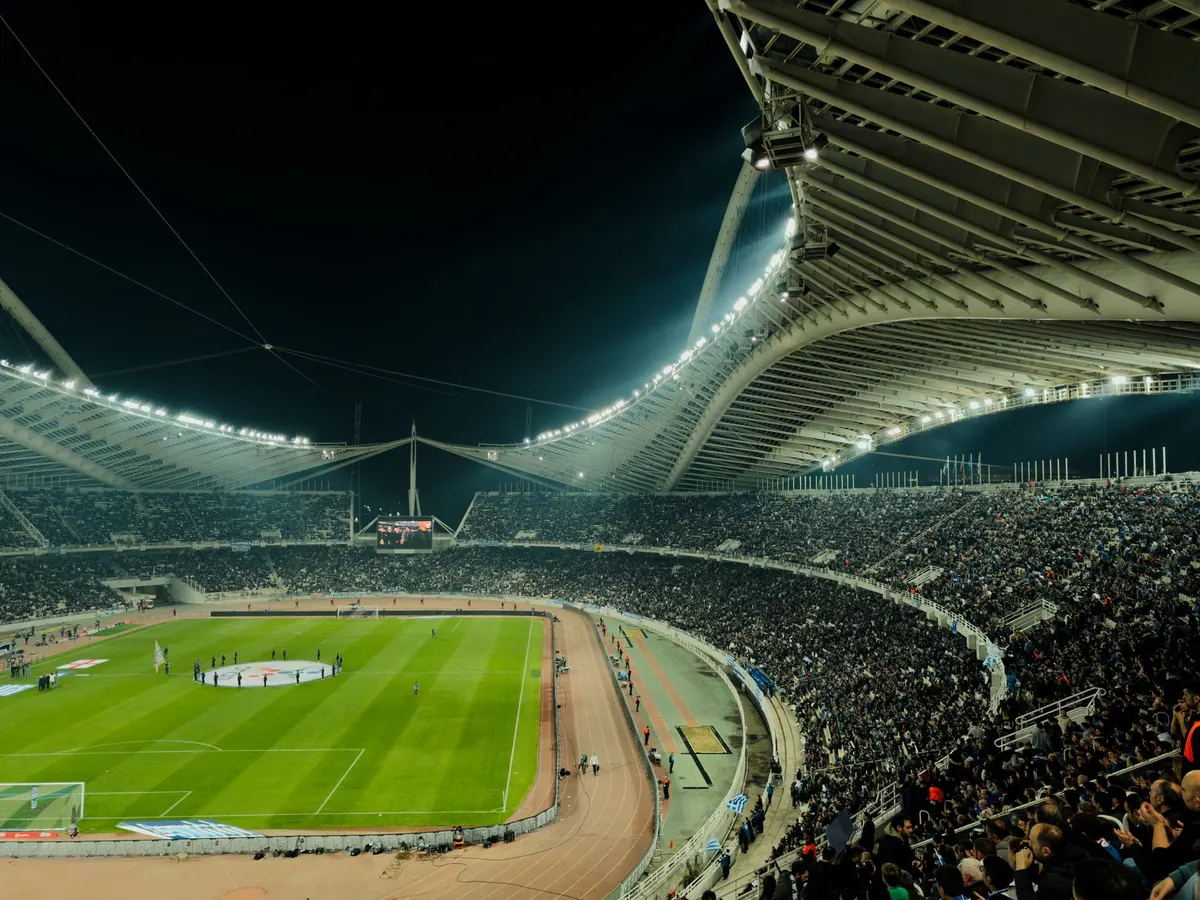
Arrive early. The curvas — the curved stands behind each goal — fill up well before kickoff, and the choreography of flags, banners and smoke that greets the teams is the part television rarely captures properly. A capo with a megaphone stands at the front, the drums start, and the whole end moves as one. Away supporters sit in a segregated section, sometimes behind glass, and the back-and-forth between the two ends is half the entertainment.
Buying tickets is straightforward if you use the club's official website or an authorised seller, and a bad idea if you use a tout. Big matches and derbies often require a membership card or photo ID, and away sections are frequently restricted to registered supporters. Bring identification to the ground. Stadiums vary enormously: a handful of modern, club-owned grounds, and plenty of old municipal ones with open curves, narrow concourses and a queue for the toilet that doubles as a social club.
Food and drink follow local habits rather than stadium logic. An aperitivo near the ground before kickoff, an espresso or a panino at half-time, and a late dinner afterwards is a reasonable template. If you are visiting, keep club colours discreet away from the stadium and out of the wrong neighbourhood — not because anything is likely to happen, but because old men in bars have long memories.
What looks different on the pitch
The tempo is generally slower and more deliberate than the Premier League, at least for the first hour. Teams value shape, and many coaches use a back three with attacking wing-backs. Set pieces are coached in detail, and defending is treated as a craft rather than a chore — you will see experienced centre-backs win games with positioning alone.
There is also the deep-lying playmaker, the regista, who sets the pace from in front of the defence, and a long tradition of strikers who do very little for eighty minutes and then score. Refereeing decisions generate endless debate, video reviews can be slow, and stoppage time has grown generous. None of this is a flaw; it is the texture of the league.
Following it all in English
Broadcast rights move every few years and vary by country, so check the official Serie A website for the current international rights holder where you live instead of trusting an old forum thread. The league's own YouTube channel posts highlights quickly, usually with English commentary options.
Club channels are underrated. Inter, Milan, Juventus, Roma and others publish in English on their websites and social accounts, which is where you will find confirmed line-ups, injury news and post-match quotes before the aggregators catch up. For live scores and formations, a standard football data app will do the job. Independent English-language podcasts and long-running sites devoted to Italian football exist and are worth seeking out; they will teach you more in a month than highlight reels will in a year.
One practical note: coverage in Italian is far richer, and thirty words of vocabulary opens most of it. Kickoff times are in Central European Time, which means the Sunday 20:45 match is 19:45 in London, 2:45 pm on the US East Coast, and late morning on the West Coast.
Words you will hear constantly
- Scudetto — the league title, and the small shield worn on the shirt the following season.
- Curva — the curved end behind the goal, home to the organised supporters.
- Tifosi — the fans. Tifo is the culture of support itself.
- Giornata — matchday; "la decima giornata" is matchday ten.
- Andata / ritorno — first leg and return leg.
- Salvezza — survival from relegation, a season-long obsession in the bottom half.
- Arbitro — referee. Portiere — goalkeeper.
Your first season: a practical plan
- Pick a club you can actually watch, not the one with the biggest reputation. Broadcast availability and a decent English-language output matter more than prestige.
- Put the fixture list in your phone in your own time zone, and treat the Sunday 20:45 match as your anchor.
- Watch one full match a week and highlights of the rest. Five half-matches teach you less than one complete game.
- Follow two or three clubs in English, plus one Italian journalist who covers the league closely.
- Learn the head-to-head tiebreak before you argue about the table with anyone.
- If you go to a game, buy through the club, carry photo ID, arrive an hour early, and sit rather than stand if you are in a non-curva section.
- Give it a full season before forming firm conclusions. Serie A rewards patience, and the league's rhythms look very different in February than they do in September.
Start with one match this weekend. The rest of the league has a way of pulling you in from there.
Photo: George Zografidis / Pexels